Art
Statement of Intent
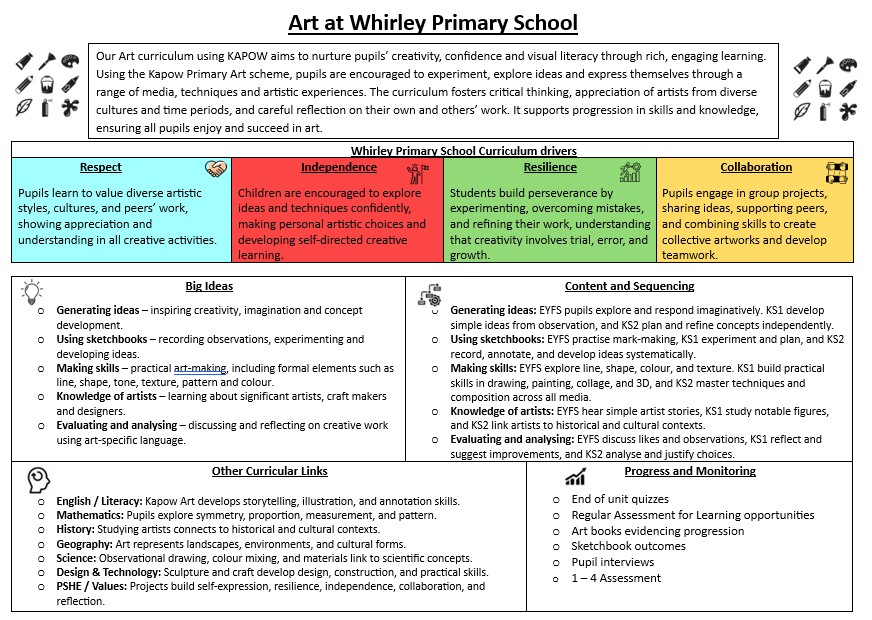
At Whirley, Art and Design is taught using ‘Kapow Primary’s Condensed Planning’, ensuring a carefully sequenced, skills-based curriculum that develops pupils’ creativity, confidence and critical thinking. Through drawing, painting and mixed media, sculpture and 3D, and craft and design, pupils progressively build technical skills, artistic knowledge and vocabulary.
Children learn to experiment, refine ideas and evaluate their own and others’ work, while developing an appreciation of diverse artists, designers and craftspeople from different cultures and time periods. Art provides pupils with opportunities to express ideas, emotions and personal experiences, fostering creativity, independence and enjoyment of the visual arts.
Curriculum Overview and Progression
The Art and Design curriculum follows ‘Kapow Primary’s Condensed Long-Term Plan’, ensuring full coverage of the National Curriculum and clear progression of skills from EYFS to Year 6. The curriculum is structured around four strands:
- Drawing
- Painting and Mixed Media
- Sculpture and 3D
- Craft and Design
These strands are revisited across year groups, allowing children to build on prior learning and develop increasing control, accuracy and creativity.
Implementation
Art and Design is taught regularly following Kapow Primary’s structured lesson sequences.
- Teaching is skills-focused, with clear modelling of techniques and opportunities for guided practice and independent application.
- Knowledge organisers and Kapow lesson resources support the teaching of key vocabulary, artist knowledge and techniques.
- A sketchbook-led approach is embedded across the school, enabling pupils to record observations, experiment with materials, develop ideas and reflect on progress.
- Lessons are inclusive and carefully differentiated to ensure all pupils can access learning and make progress.
- Pupils are introduced to a wide range of contemporary and historical artists, designers and craftspeople, supporting cultural capital and artistic understanding.
- Children are taught to select, use and care for tools and materials safely and responsibly.
- Opportunities are built in for pupils to evaluate their own work and the work of others using appropriate artistic vocabulary.
Assessment in Art and Design is ongoing and formative.
- Teachers assess pupils through observation, discussion, sketchbook work and finished outcomes.
- Progress is measured against the skills and knowledge set out in Kapow’s unit objectives.
- Sketchbooks provide evidence of progression over time, showing experimentation, refinement and improved technical skill.
- Assessment is used to inform planning and provide targeted support or challenge where needed.
Impact
By the time pupils leave our school, they will:
- Use a range of media and techniques confidently, including drawing, painting, sculpture and craft processes.
- Demonstrate clear progression in artistic skills and knowledge across year groups.
- Use sketchbooks effectively to explore ideas, experiment with techniques and reflect on their learning.
- Talk confidently about their own artwork and that of others, using appropriate artistic vocabulary.
- Understand how artists use visual elements to communicate ideas, emotions and meaning.
- Show independence, creativity and pride in their artistic outcomes.
- Leave with a positive attitude towards Art and Design and an understanding of its value within the wider world.
Inclusion and Equal Opportunities
All pupils have equal access to the Art and Design curriculum. Lessons are adapted where necessary to support individual needs, ensuring that all children can participate fully and experience success.
Year by Year…..
EYFS
In EYFS, children are introduced to art through exploration, play and guided experiences. Through Drawing: Marvellous marks, children explore mark making using a range of drawing materials and begin to draw from observation. In Painting and mixed media: Paint my world, children experiment with paint, colour and texture, developing creativity through child-led exploration, collage and transient art. Sculpture and 3D: Creation station introduces children to malleable materials and simple tools, supporting early sculpting and joining skills. Across all units, children develop fine motor control, creativity and confidence in expressing ideas through art.
Year 1
In Year 1, children develop their understanding of basic artistic skills and processes. Through Drawing: Exploring line and shape, they investigate how lines and shapes can be used to create images, working with a range of materials and drawing from observation. Sculpture and 3D: Paper play introduces children to creating simple 3D forms using paper and card, developing skills in folding, rolling and joining. In Painting and mixed media: Colour splash, children explore colour mixing, paint application and surface, creating work inspired by artists such as Clarice Cliff and Jasper Johns.
Year 2
In Year 2, children build on prior skills with increasing control and purpose. Drawing: Understanding tone and texture develops observational drawing skills, focusing on how artists use tone and texture. In Painting and mixed media: Life in colour, children extend colour mixing skills and create textured papers and collages inspired by the work of Romare Bearden. Sculpture and 3D: Clay houses introduces children to working with clay, learning essential shaping and joining techniques while responding to the sculpture of Rachel Whiteread.
Year 3
In Year 3, children further refine drawing, sculpture and design skills. Drawing: Developing drawing skills focuses on shading and detail, using botanical forms and digital drawing techniques. In Craft and design: Ancient Egyptian scrolls, children explore pattern, symbolism and design, developing craft skills through paper making and scroll construction. Sculpture and 3D: Abstract shape and space develops understanding of form and negative space as children construct free-standing sculptures inspired by Anthony Caro.
Year 4
In Year 4, children deepen their technical accuracy and creative decision-making. Drawing: Exploring tone, texture and proportion supports children in creating more realistic drawings. Painting and mixed media: Light and dark focuses on colour mixing, tints and shades, enabling children to create a sense of depth and form in still life compositions. In Craft and design: Fabric of nature, children use rainforest flora and fauna as inspiration to develop drawings and textile techniques, designing repeating patterns suitable for fabric.
Year 5
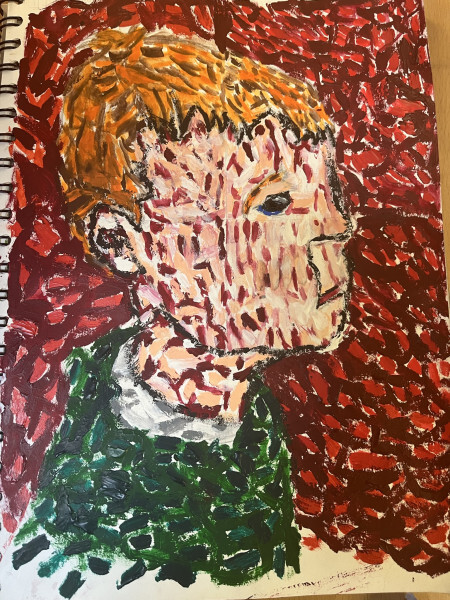
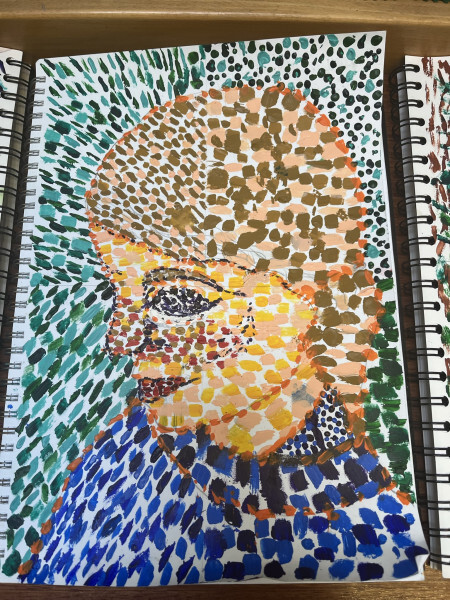
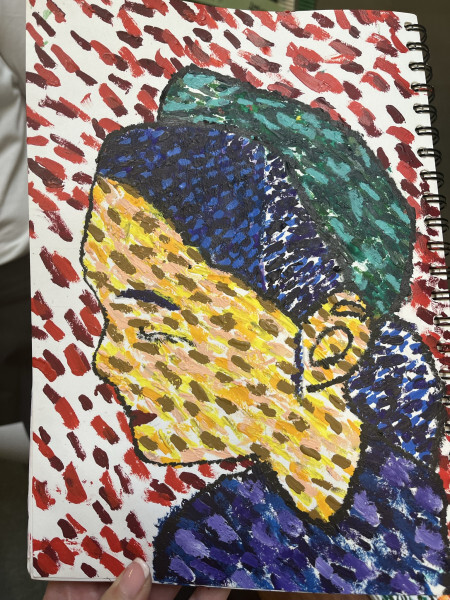
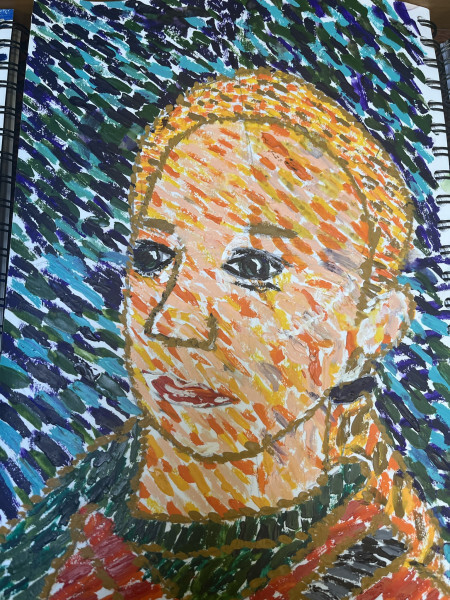
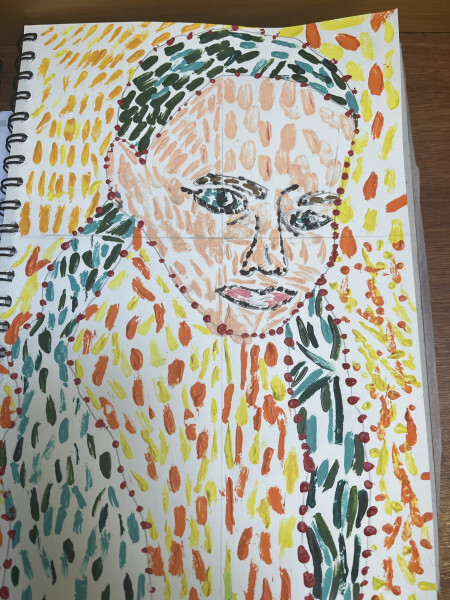
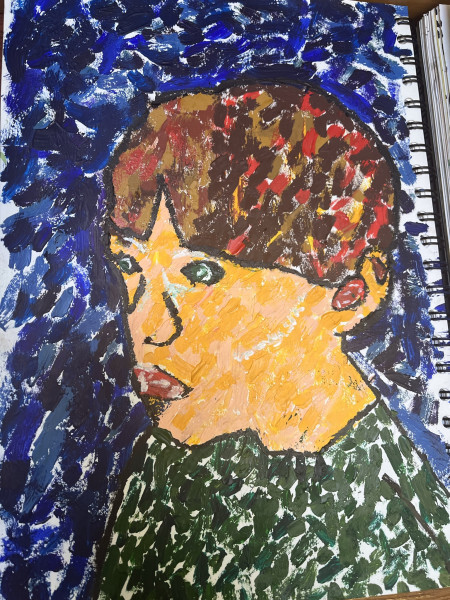
In Year 5, children apply their skills with confidence and increasing independence. Through Sculpture and 3D: Interactive installation, children explore space, structure and viewer interaction. Drawing: Depth, emotion and movement develops expressive mark making to convey feeling and movement. In Painting and mixed media: Portraits, children investigate self-portraits by a range of artists and use photographs as a starting point to create personal mixed-media portraits.
Year 6
In Year 6, children use art as a means of expression, reflection and communication. Craft and design: Photo opportunity develops photography skills and creative composition. In Drawing: Expressing ideas, children explore how artists communicate meaning through scale and visual choices. Sculpture and 3D: Making memories brings together skills from across the curriculum as children create a personal memory box using found objects and hand-sculpted forms, reflecting on their primary school journey.